The Nook
Unreal
Blueprints
Blender
Github
Miro
Design Goals
A Calmer Daily Experience
The Nook was designed to support neurodivergent players, with a particular focus on creating a comfortable experience for people on the autism spectrum. The goal was to make a game that could become a reassuring daily check-in rather than an overwhelming task list.
Research-Informed Atmosphere
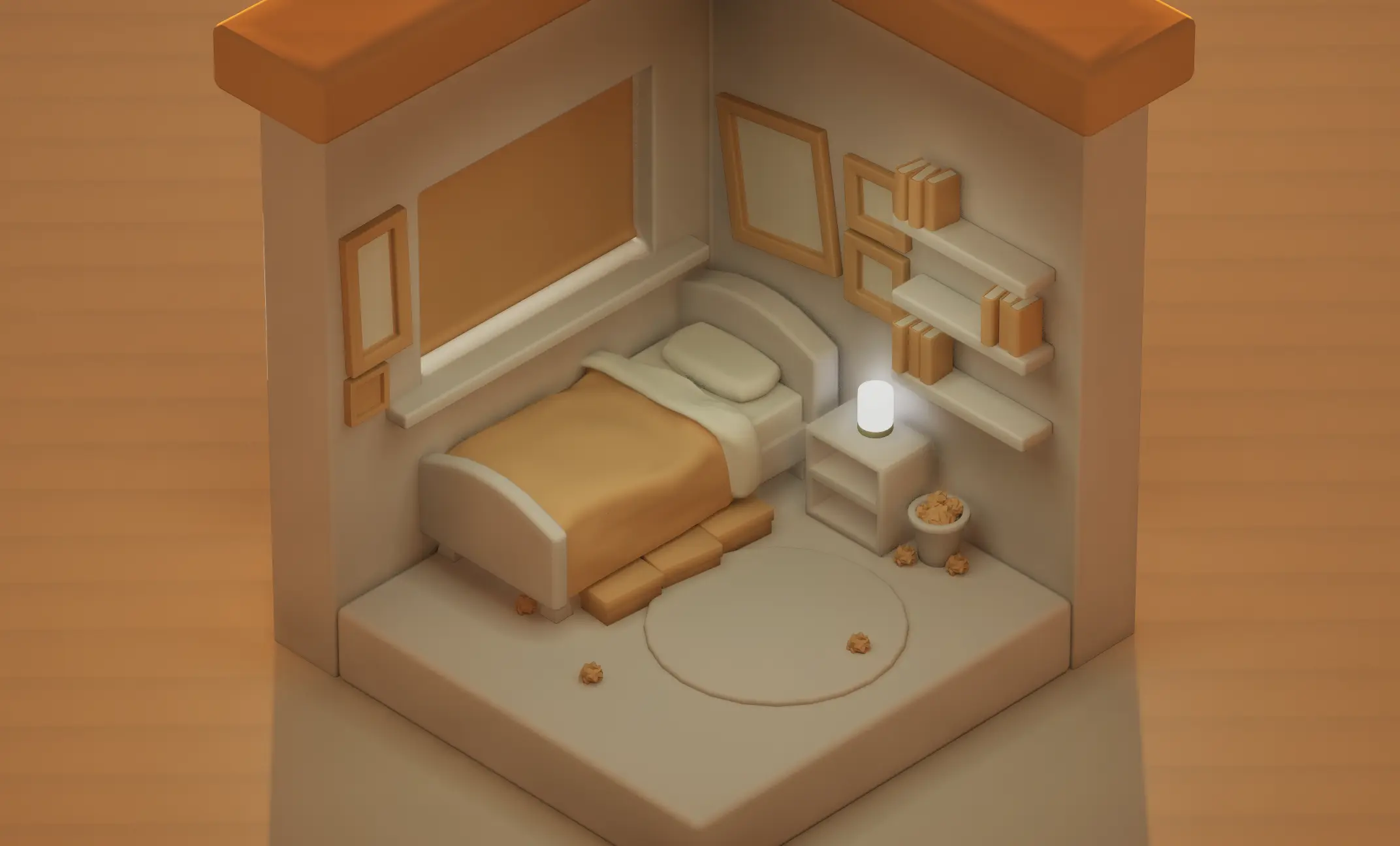
Accessibility was considered alongside the game's colour theory, sound design, and ambience. These choices were intended to support players who may be sensitive to overstimulation while still giving the room a sense of life and progression.
Technical Achievements
Daily Check-In And Streaks
A daily time tracker monitors the player's last login session and supports the game as a check-in experience. To earn a new streak, the player completes a room tidy while being guided through breathing exercises and mood tracking.
Modular Room Feedback
Event dispatchers and interfaces announce changes in the player's mood, lighting, and soundscape. This keeps the systems modular while allowing the room to respond dynamically to the player's current state.
Accessibility And Settings
Player-Controlled Stimulation
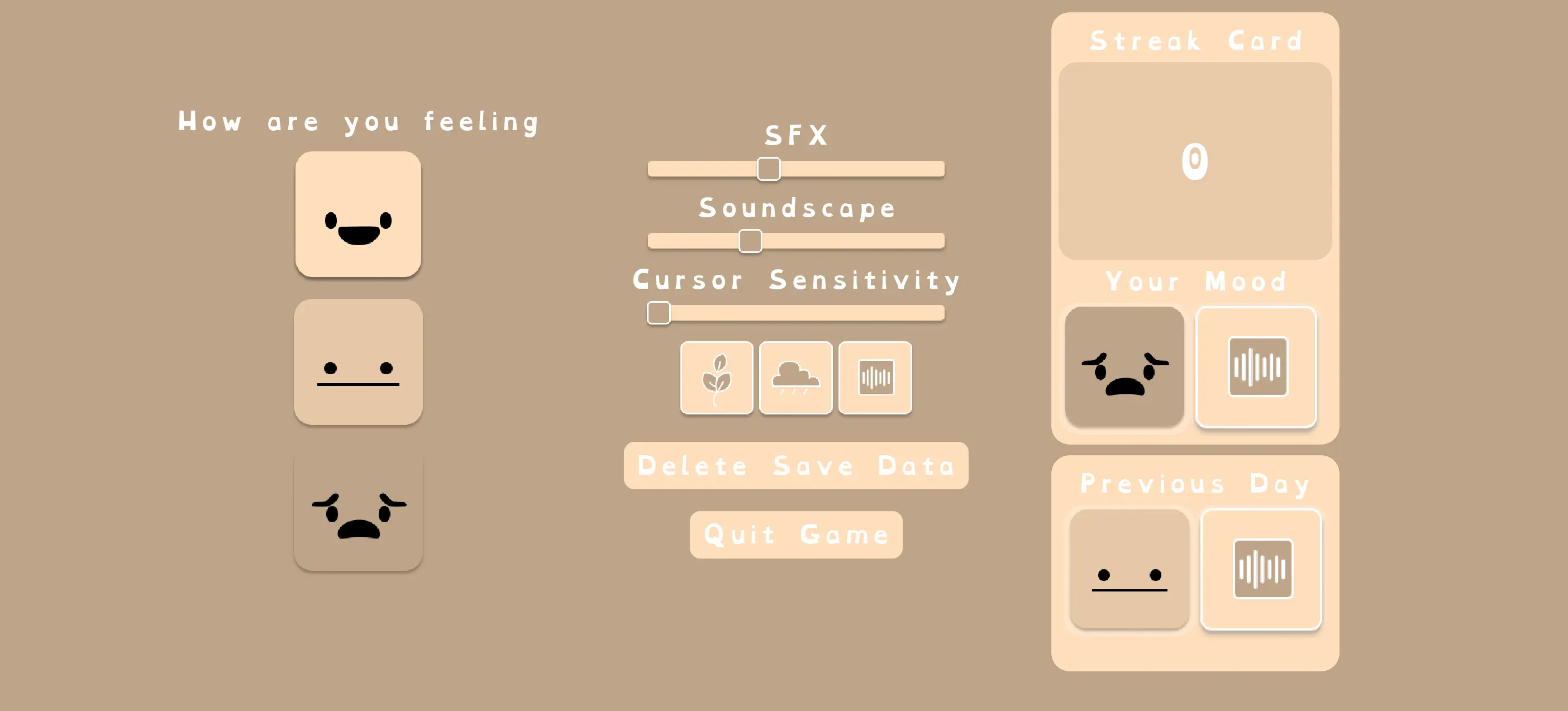
Settings are exposed before the game can become overstimulating, allowing players to customise parts of the experience to better suit their needs. This places control with the player instead of assuming the same presentation will work for everyone.
Supporting The Intended Experience
The settings work alongside the room's state-driven lighting, sound, and mood feedback. Together, these systems create a more adaptable space without requiring the core daily routine to change.
Learning Outcomes
Rapid Prototyping With Intent
The Nook pushed my prototyping skills while requiring me to maintain good code practices and aim for polished mechanics. The project was an exercise in building a complete experience around a small, repeatable interaction.
User Testing
User testing suggested that the game appealed to neurodivergent users as intended. Time constraints limited the polish and replayability of the primary cleaning loop, but the feedback helped validate the project's central direction.
Future Development
With more time, I would explore procedural objective generation and multiple rooms, with objectives responding directly to the player's mood. These additions would expand the experience without losing its calm, structured foundation.